Ingredients
Equipment
Method
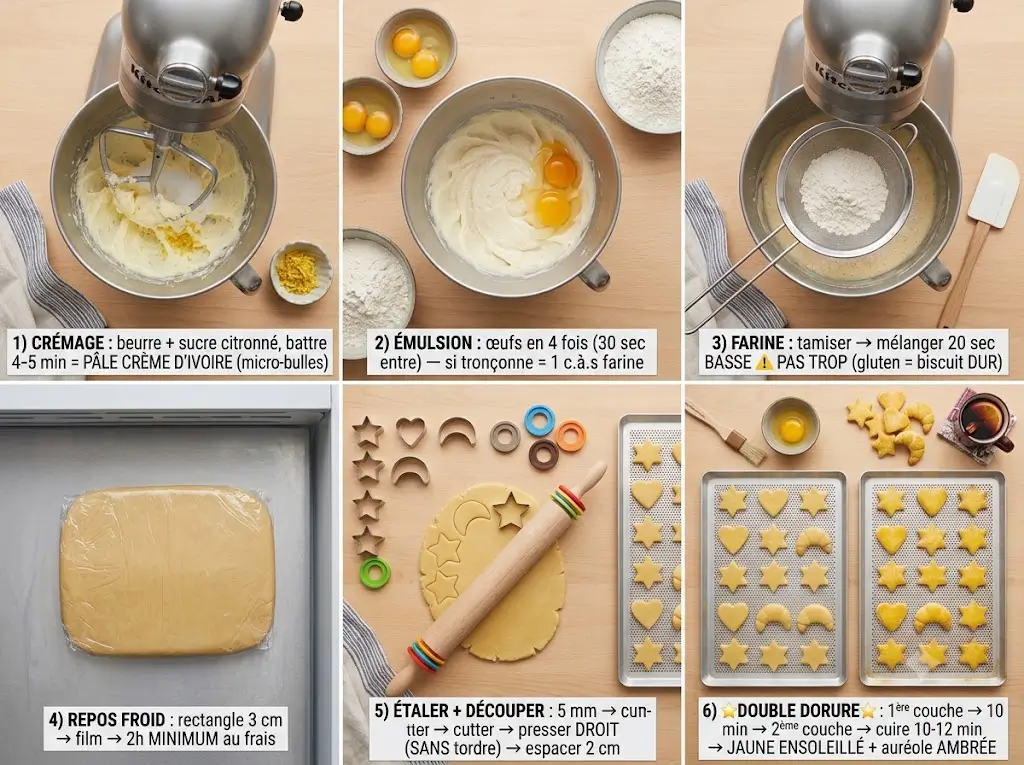
Step 1: Creaming the Lipid Base
Place your softened butter and lemon-infused caster sugar into your mixing bowl. Run the paddle attachment on medium speed for 4 to 5 full minutes. Stop twice to scrape down the sides of the bowl with a flexible spatula. You are looking for a stark visual transformation: the yellow butter will turn a pale, creamy ivory and fluff up visibly as millions of microscopic air pockets get trapped in the fat.Step 2: Emulsifying the Eggs
Crack your 3 whole eggs into a pouring jug and whisk lightly to break up the proteins. With your mixer running on low speed, pour the eggs into the butter in four separate additions. Wait roughly 30 seconds after each splash until the liquid is fully absorbed. Actionable Fix: If the mixture begins to look curdled or separated like cottage cheese, toss in one tablespoon of your weighed flour to immediately bind the escaping water.Step 3: Integrating the Flour
Sift the 500g of flour and pinch of sea salt directly over the fluffed butter base. Switch your machine to its absolute lowest setting, or switch to a wide wooden spoon. Fold the dry ingredients in only until the white flour streaks disappear—roughly 20 seconds. Over-working the dough at this stage stretches the wheat proteins, turning what should be a tender, melting biscuit milanais into a tough, chewy cracker.Step 4: Cold Thermal Stabilization
Turn the soft, fragrant dough out onto a sheet of baking paper. Press it down into a neat, flat rectangle roughly 3cm thick. Wrap it airtight in plastic cling film and place it in the coldest zone of your refrigerator for at least 2 hours. This solidifies the butterfat and gives the starches ample time to absorb ambient dough moisture uniformly.Step 5: Rolling and Stamping
Preheat your oven to 180°C (standard conventional bake) or 165°C (fan-assisted convection). Dust your granite or wooden work surface very lightly with flour. Unwrap the chilled dough block and roll it out to an exact 5mm thickness. Dip the sharp edges of your cutters into flour, tap off the excess, and press straight down into the dough. Do not twist the cutter; twisting crimps the vertical edges of the dough and prevents a clean, uniform vertical rise in the oven.Step 6: The Double-Glaze Method
Transfer the stamped shapes onto a parchment-lined baking sheet, leaving 2cm of empty space between them. In a small ramekin, whisk the 2 extra egg yolks with 1 teaspoon of whole milk or cream. Using your soft bristle brush, paint a light coat over the flat tops of the biscuits. Let the tray sit on the counter for 10 minutes until the glaze feels slightly tacky to the touch, then apply a second, tissue-thin coat. Bake for 10 to 12 minutes. Remove them when the tops are a vivid sunshine yellow and the very bottom perimeter displays a faint amber halo.