Outdoor storage box 7 best setup tips for garden gear
Did you know that leaving your horticultural tools and expensive smart garden technology exposed to the elements can reduce their functional lifespan by up to 60%? For many modern gardeners, protecting robotic mowers, Wi-Fi irrigation controllers, and delicate heirloom seeds from unpredictable weather is a constant battle. The ultimate solution is a high-quality outdoor storage box. Integrating a heavy-duty, weather-resistant container into your backyard not only declutters your patio but creates a secure, climate-monitored hub for your most valuable gardening assets. In this comprehensive guide, we will explore how to select, assemble, and optimize your garden storage using modern techniques and smart tech integrations for a flawless outdoor setup.
Quick Answer:
An outdoor storage box is a durable, weather-resistant container designed to protect gardening tools, patio cushions, and smart tech from rain and UV damage. To maximize its utility, place it on a level, well-draining foundation, ensure proper internal ventilation, and add a smart humidity sensor to safely store moisture-sensitive seeds and fertilizers.
Materials and Supplies List
Setting up the perfect outdoor organization hub requires selecting the right base materials and protective accessories. Investing in premium supplies upfront prevents leaks, rust, and pest infestations down the line. Here is exactly what you need:
- The Storage Unit: Choose a box made from High-Density Polyethylene (HDPE) resin, galvanized steel, or weather-treated Western Red Cedar. Resin is highly recommended for its zero-maintenance, UV-resistant properties.
- Foundation Materials: Concrete patio pavers, crushed gravel, or a heavy-duty composite equipment pad to keep the box elevated off the damp earth.
- Weatherproofing Add-ons: A tube of exterior-grade clear silicone caulking to seal bottom seams and marine-grade padlocks to secure your expensive smart gardening equipment.
- Smart Tech Components: A Bluetooth or Wi-Fi-enabled smart hygrometer/thermometer sensor (like Govee or SwitchBot) to monitor internal humidity levels, and motion-sensor LED puck lights for nighttime visibility.
- Eco-Friendly Substitutions: If you want to avoid new plastics, look for storage benches crafted from 100% recycled ocean plastics, or repurpose a reclaimed wooden shipping crate by sealing it with natural raw linseed oil.
Tools and Equipment Required
Whether you are snapping together a resin deck box or building a wooden storage trunk from scratch, you will need a few essential tools to ensure the structure is perfectly square, level, and secure:
- Assembly Tools: A cordless power drill with adjustable torque, a rubber mallet for tapping resin panels into place without cracking them, and a standard Phillips-head screwdriver.
- Site Preparation Tools: A steel bow rake to level the ground, a tamper to compact the soil, and a 24-inch spirit level to ensure the foundation is perfectly flat.
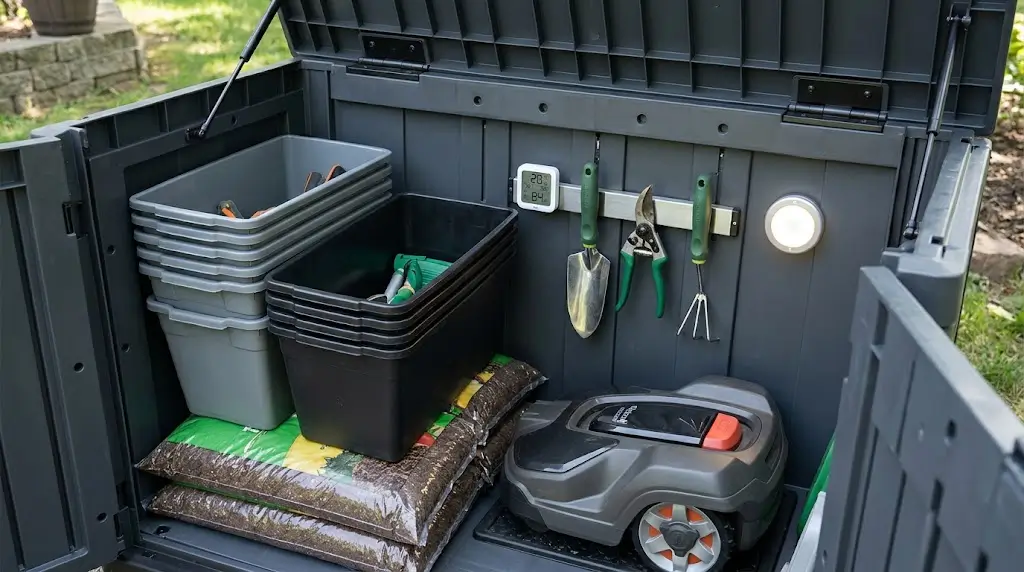
- Organization Gear: Plastic airtight seed-saving organizers, stackable heavy-duty bins for organic fertilizers, and tool racks or magnetic strips to mount small hand trowels and pruners to the interior walls.
- Tech Installation Gear: Double-sided heavy-duty mounting tape for the LED lights and smart humidity sensors.
Project Time & Growth Timeline
Installing and optimizing an outdoor storage box is a fast, highly rewarding project that yields immediate organizational benefits and protects your long-term gardening investments.
- Active Setup Time: 1 to 3 hours. Preparing and leveling a gravel or paver foundation takes the most time (about 1 to 2 hours). Assembling a standard resin or steel box usually takes less than 45 minutes with a cordless drill.
- Ongoing Maintenance Time: Integrating smart tech reduces manual checks. Expect to spend just 5 minutes a month checking your smartphone app for humidity alerts or replacing the batteries in your motion-sensor lights.
- Expected Lifespan and ROI: A high-quality resin or treated wood structure will last 10 to 15 years. By protecting your $200 smart irrigation controllers and $150 titanium pruning shears from rust and water damage, the unit effectively pays for itself within the first two harsh weather seasons.
Step-by-Step Guide
1. Choose and Prep the Ideal Location
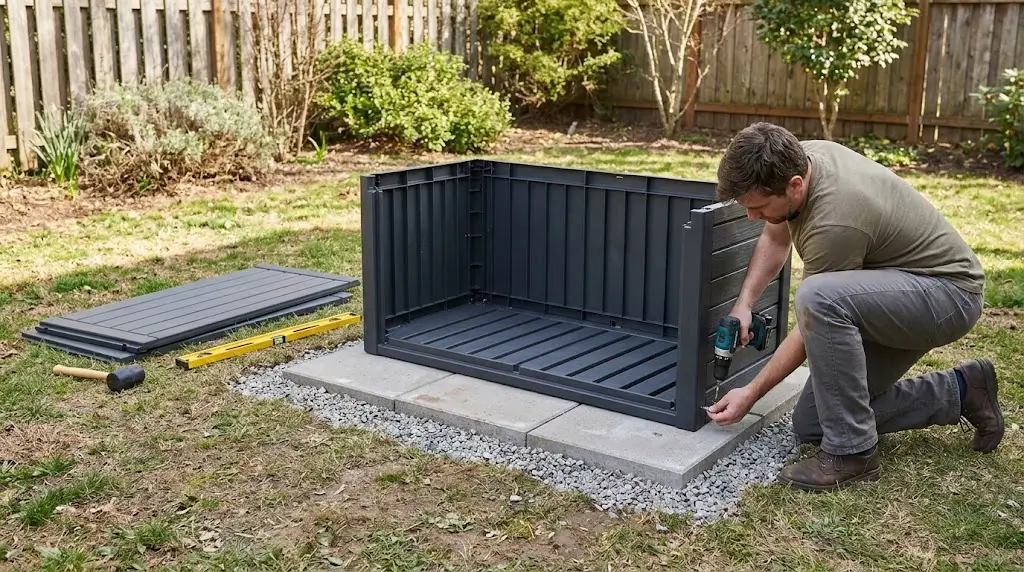
Never place your storage unit directly on soft mud or grass. Moisture will seep up through the bottom, leading to mold and structural warping. Choose a location near your primary garden beds or patio. Dig out a shallow 2-inch trench matching the footprint of your box, fill it with crushed gravel, and lay down flat concrete pavers. Use your spirit level to ensure the base is flawlessly horizontal so the lid hinges operate smoothly.
2. Assemble the Weatherproof Panels
If using a resin kit, lay all the pieces flat on a non-abrasive surface like a lawn blanket to prevent scratching. Start by attaching the side panels to the floor piece, using your rubber mallet to firmly click the interlocking tabs into place. Secure the corners with the provided steel screws using your cordless drill on a low-torque setting to avoid stripping the plastic threads.
3. Seal for Maximum Weather Resistance
Even the best outdoor containers can experience minor water intrusion during heavy storms. To create a watertight fortress, run a thin bead of exterior-grade clear silicone caulk along the interior bottom seams where the floor meets the walls. This is especially critical if you plan to store dry goods like organic granular fertilizer, potting soil, or expensive grass seed.
4. Install Smart Sensors and Lighting
Make your box work for you. Mount a battery-operated, motion-activated LED light to the underside of the lid so you can find your tools during late-night garden checks. Next, attach a smart Wi-Fi hygrometer to the upper interior wall. This device will ping your phone if the internal humidity spikes, allowing you to rescue your heirloom seeds before they succumb to mildew.
5. Organize Internal Gear and Tech
Do not just throw your equipment inside. Use rigid plastic inserts or modular shelving to separate heavy items (like bags of soil) on the bottom from delicate items (like smart soil sensors and seed packets) on top. Install a magnetic tool bar along the back wall to hang your pruners, hori-hori knives, and spare robotic lawnmower blades safely out of the way.
Plant Requirements & Technical Specs
Understanding the physical and technical limitations of your storage unit ensures you do not accidentally destroy the items you are trying to protect:
- Temperature Fluctuations: Most outdoor storage boxes are not insulated. In peak summer, the interior can reach over 120°F (49°C). Never store liquid fertilizers, chemical pesticides, or live bulbs in a closed box during high summer, as the heat will cause liquids to expand and leak, and bulbs to cook.
- Ventilation Specs: Look for a unit with built-in passive ventilation louvers. Without airflow, the natural condensation caused by shifting day-to-night temperatures will create a humid microclimate, instantly rusting metal tools.
- Weight Capacity: If you plan to use the box as patio seating, check the manufacturer’s dynamic weight rating. Most heavy-duty HDPE boxes can support 400 to 600 pounds on the lid, but cheaper thin-walled plastics will buckle under human weight.
- Device Connectivity: If using a Wi-Fi hygrometer, ensure the box is located within 100 feet of your home router. Thick resin or steel walls can slightly dampen wireless signals, so a robust 2.4GHz connection is required for reliable smart home integration.
Alternative Methods & Eco-Friendly Options
If a brand-new plastic container does not fit your sustainable garden aesthetic, consider these highly functional, eco-friendly alternatives:
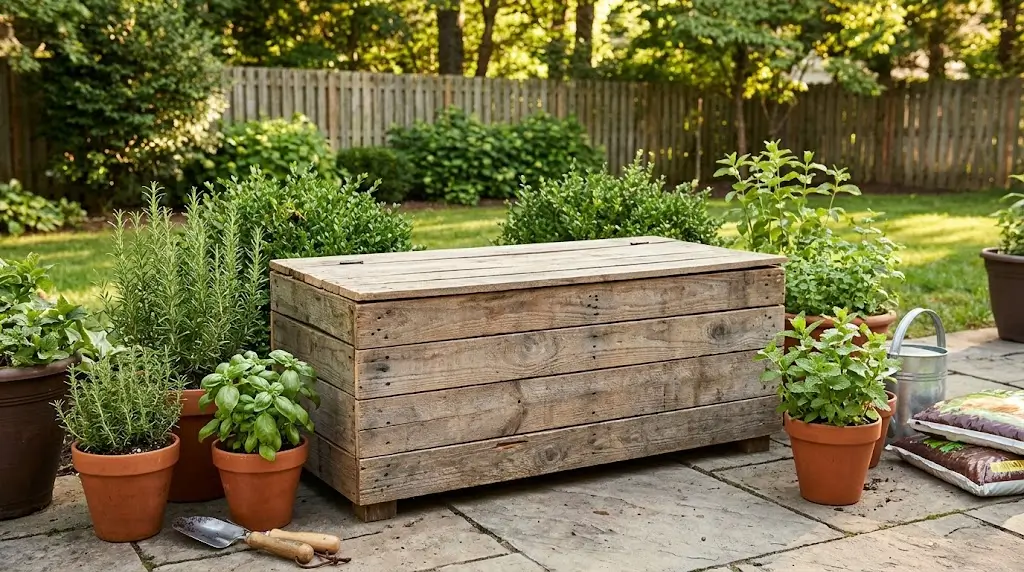
- Upcycled Wooden Pallets: Break down heat-treated (HT) wooden shipping pallets and reconstruct them into a rustic, slatted storage bench. Line the inside with heavy-duty upcycled agricultural plastic to keep water out, and finish the exterior with a natural beeswax sealant.
- Reclaimed Galvanized Troughs: Old galvanized steel livestock watering troughs make incredible, waterproof storage bins. Simply cut a piece of exterior-grade plywood to act as a hinged lid, coat it in marine varnish, and you have a stylish, rodent-proof industrial container.
- Dual-Purpose Cold Frames: Build a wooden box with a heavy polycarbonate slanted lid. During the winter and early spring, use it as a solar-heated cold frame to harden off your seedlings. In the summer, clean it out and use it to store your dry gardening tech and patio gear.
Placement and Companion Planting Suggestions
Integrating a large utility box into your carefully curated landscape requires thoughtful placement and strategic planting to soften its appearance.
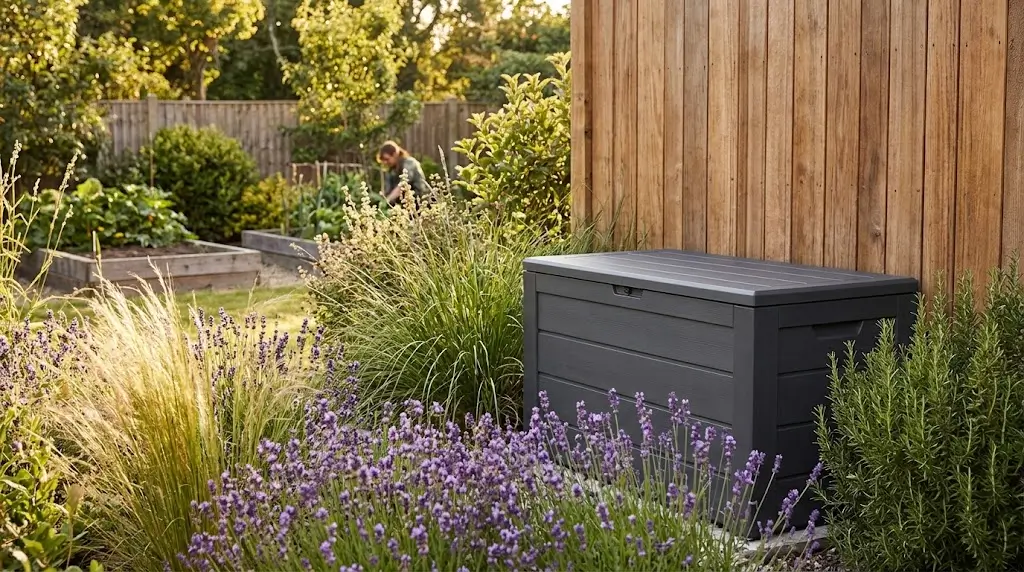
- Optimal Placement: Position the box against a fence line, retaining wall, or the side of a garden shed to anchor it visually and protect it from high wind gusts. Ensure there is at least 6 inches of clearance behind the box so the lid can open fully without scraping the wall.
- Companion Landscaping: To blend the structure into your yard, plant tall, fragrant companion plants around the sides. Lemongrass, Lavender, and Peppermint are excellent choices. Not only do they look beautiful and soften the harsh plastic edges of the box, but their strong essential oils naturally repel spiders, mice, and wasps from attempting to nest inside your stored gear.
Common Mistakes to Avoid
Even the most expensive outdoor storage box will fail if improperly utilized. Avoid these common setup and maintenance pitfalls:
- Trapping Moisture with Wet Gear: Never put a soaking wet garden hose, a damp patio cushion, or a muddy trowel directly into a closed box. The trapped moisture will evaporate, turn into condensation on the ceiling, and rain back down on your electronics and seeds, causing rapid mold growth and rust. Always let gear dry completely before storing.
- Placing on Uneven Ground: If the ground beneath the box is sloping or bumpy, the heavy weight of the items inside will warp the plastic floor over time. This twisting pulls the walls out of alignment, meaning the waterproof lid will no longer shut tightly, inviting rain and insects inside.
- Storing Food or Birdseed: Unless you have a heavy-duty galvanized steel box, do not store bags of birdseed, pet food, or grass seed without putting them in a secondary thick plastic bucket. Squirrels, raccoons, and mice can easily chew through resin hinges or plastic walls to get to an easy meal.
Maintenance and Long-Term Care Tips
To keep your storage solution looking pristine and functioning perfectly year after year, implement this simple seasonal care routine:
- Spring Cleaning and Lubrication: Once a year, empty the entire box. Use a hose and a soft-bristle brush with mild dish soap to scrub away algae, pollen, and dirt. While it is empty, spray a dry Teflon or silicone lubricant on the metal lid hinges and hydraulic gas struts to prevent squeaking and rust.
- UV Protection: If you have a resin or plastic box placed in full, direct sunlight, the plastic will eventually become brittle and fade. Every summer, wipe the exterior down with a marine-grade UV protectant spray (commonly used for boat seats) to rehydrate the plastic and prevent sun bleaching.
- Winterizing Smart Tech: Before the first hard freeze of winter, remove any liquid products from the box to prevent them from freezing and bursting. Additionally, take your smart humidity sensors and motion lights indoors, as sub-zero temperatures will permanently damage their lithium-ion batteries and delicate circuit boards.
Conclusion
An outdoor storage box is the ultimate investment for protecting your valuable smart garden tech and horticultural tools. By choosing weather-resistant materials and utilizing smart sensors, you ensure your gear remains pristine. Try building your own setup, share your garden photos below, and subscribe for more Smart Gardening & Tech updates!
FAQs
Are resin outdoor storage boxes completely waterproof?
While most high-quality resin boxes are highly weather-resistant and will keep out rain from above, they are rarely 100% waterproof if submerged. Driven rain from hurricane-force winds can sometimes penetrate the side seams. For ultimate protection of electronics, place them in a smaller waterproof dry bag inside the box.
Can I use an outdoor storage box as extra patio seating?
Yes, but only if the manufacturer explicitly states it is designed as a “storage bench.” Look for models that specify a lid weight capacity of at least 300 to 400 pounds. Standard, thin-walled storage boxes will crack or cave in if an adult sits on them.
How do I stop spiders and bugs from getting inside?
Insects seek out dark, undisturbed places. To keep them out of your gear, place a few cotton balls soaked in pure peppermint essential oil in the corners of the box. Additionally, toss in a few cedarwood blocks; the natural oils in cedar are a highly effective, eco-friendly insect repellent that keeps your storage space smelling fresh.